Carney quotes a dissident while building a surveillance state
In Carney's latest speech he cites Havel's critique of authoritarian regimes. His legislation suggests he'd rather be the regime.

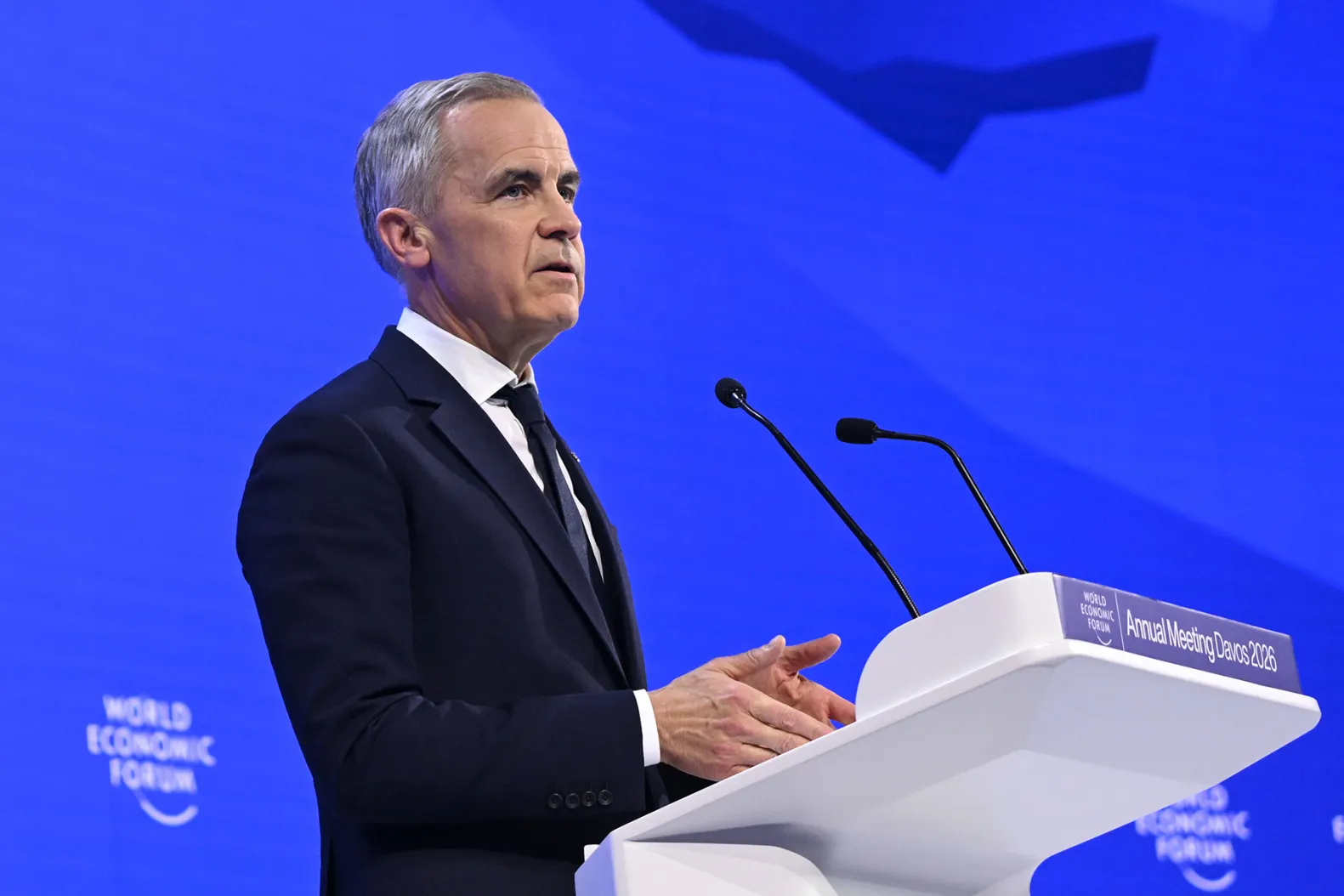
In Carney's latest speech, lauded by some as one of the greatest moments in Canadian history, Carney cites Václav Havel's 1978 essay The Power of the Powerless. In it, Havel describes a greengrocer under communist Czechoslovakia who places a sign reading "Workers of the world, unite!" in his window each morning to avoid trouble and signal compliance with the ruling regime. Carney comparing Canada to a business that kept the sign in the window to avoid being imprisoned or shot under a communist regime is ironic given every bill his government has introduced since taking power is designed to increase authoritarian control structures and strip freedoms from Canadians.
Havel's essay was a critique of systems that maintain power through surveillance, coerced participation, and the suppression of dissent. He wrote about citizens monitored by the state, unable to speak freely, forced into public rituals of compliance while privately knowing the whole arrangement was built on lies. The greengrocer's sign wasn't about belief, it was about survival under a regime that punished non-compliance.
Since taking office, Carney's government has introduced bills enabling warrantless access to Canadians' online activities, secret orders compelling companies to install surveillance backdoors, cabinet powers to override laws passed by Parliament, and new criminal offences that civil liberties groups warn will be used to suppress protest. The critics aren't fringe voices. They include the Canadian Civil Liberties Association, the Electronic Frontier Foundation, Citizen Lab, the Intelligence Commissioner of Canada, and over 300 civil society organizations.
Carney wants to play the dissident. His legislation suggests he'd rather be the regime.
Bills Introduced by the Carney Government (Since March 2025)
Quick summary if you prefer not to read the details:
- C-2/C-12: Mass surveillance expansion, warrantless data access, data-sharing with US law enforcement
- C-5: Unprecedented executive discretion to bypass laws passed by Parliament
- C-8: Secret orders to install backdoors, warrantless information collection
- C-9: Criminalization of protest activities, removal of safeguards against politically motivated charges
Bill C-2 / C-12 – Strong Borders Act
The Strong Borders Act grants new enforcement powers and expands search powers unrelated to the border. Key provisions include:
- Police and CSIS will be able to demand information about peoples' online activities based on the low threshold of "reasonable suspicion." Companies would have only five days to challenge an order, with blanket immunity from lawsuits if they hand over data.
- Police and CSIS will be able to find out whether you have an online account with any organization or service in Canada without a warrant. They can demand to know how long you've had it, where you've logged in from, and which other services you've interacted with.
- The bill will allow for the introduction of encryption backdoors.
- Allow the government to revoke immigration permits of entire groups of people en masse based on things like country of origin, without any ability for individuals to appeal.
- Justice Canada officials acknowledged the intent of certain provisions is to enable Canada to implement and ratify a new data-sharing treaty with the United States.
- The bill will bring about the most significant expansion of investigative search powers in Canada in over a decade.
After backlash from over 300 civil society organizations, the Liberals announced they plan to push through this Bill by breaking it into smaller pieces (C-2 and C-12).
Bill C-5 – One Canadian Economy Act / Building Canada Act
It gives the government unprecedented powers through:
- Section 23 allows the federal Cabinet to make regulations that exempt a project from any provision of the Act. These are extraordinarily broad discretionary powers that allow existing environmental regulatory requirements to simply be ignored.
- "Cabinet, with cabinet secrecy, can pass a regulation that changes a law duly passed by Parliament. That's really radical."
- Some senators are referring to Bill C-5 as the "trust me" law, meaning that there aren't enough details and guardrails within the legislation.
- It will allow the cabinet to go around nearly every existing hurdle impeding large project developments. Bill C-5 will not change any of these problematic laws and regulations. It simply will allow the cabinet to choose when and where they're applied. This is cronyism at its worst and opens up the Carney government to significant risks of favouritism and corruption.
- The Act erodes democratic principles, runs roughshod over Indigenous rights, shuts Canadians out of decisions that could affect them, and puts the environment at risk.
Bill C-8 – Critical Cyber Systems Protection Act
- By failing to guarantee critical end-to-end encryption protocols will not be undermined, Bill C-8 risks doing more harm than good to cybersecurity. Its ongoing inclusion of warrantless data access mechanisms and use of a secrecy by default approach pose an additional threat to privacy.
- If a non-amended Bill C-8 passes, all telecom providers in Canada would be compellable through secret orders to install backdoors inside Canada's networks by weakening encryption or network equipment.
- The Intelligence Commissioner of Canada warned that, if passed, the bill would authorize warrantless seizure of sensitive private information.
- The bill gives government ministers broad powers to issue secret orders, compelling telecom companies, banks, and other federally regulated organizations to act in ways that could weaken encryption.
Bill C-9 – Combatting Hate Act
- As drafted, the Bill threatens labour rights, fundamental freedoms, the right to protest, and public accountability.
- Without amendment, Bill C-9 will erode the right to strike, making certain legal job actions a criminal offense punishable by up to 10 years in prison.
- Bill C-9's intimidation and obstruction offences are overly broad, vague, and pose the risk of criminalizing peaceful protests.
- Bill C-9 would remove safeguards against politically motivated charges, remove political accountability for charges, create a risk of overcharging to force plea bargains, expand the availability of hate offences beyond the criminal law, and risks limiting constitutionally protected protest activity.
- The bill also expands limits on demonstrations by banning protests around community, cultural, and religious centres, regardless of the activities taking place inside.