Any new law you cheer for can be used against you next
If you are afraid of what a Conservative government might do with power, you are not wrong to feel that way, but the people most afraid of right-wing authoritarianism are the ones most enthusiastically building the infrastructure for it.

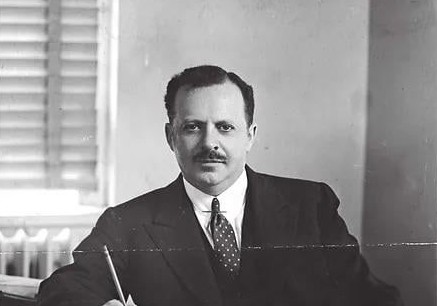
If we understand the mechanism and motives of the group mind, is it not possible to control and regiment the masses according to our will without their knowing about it?- Edward Bernays
If you are afraid of what a Conservative government might do with power, you are not wrong to feel that way. That instinct to worry about the next government, the one you did not vote for, is one of the healthiest impulses a citizen can have, and it is exactly the kind of thinking that a functioning democracy depends on. But something has gone badly wrong with how that fear is being channeled, because right now, the people most afraid of right-wing authoritarianism are the ones most enthusiastically building the infrastructure for it.
In February of 2022, the Canadian government invoked the Emergencies Act for the first time in the country's history and used it to freeze the bank accounts of citizens who had not been charged with a crime. You may have supported that decision. You may have thought the convoy protesters were dangerous or foolish or both, and you may have felt a grim satisfaction watching their funding dry up overnight. But here is what you need to sit with, and I mean really sit with, not dismiss with a reflexive "that was different." The precedent did not expire when the emergency ended. It is now part of the political toolkit available to every future prime minister, including the ones you are terrified of.
Picture this clearly, because it is not a hypothetical. A Conservative government takes power. A left-wing protest blocks critical infrastructure, maybe a pipeline protest, maybe a climate action, maybe something you care about deeply. The prime minister invokes emergency powers and freezes the bank accounts of every donor. Every person who sent twenty dollars to a GoFundMe wakes up to find their accounts locked. No charges. No trial. No court order. Just a government that decided they were a threat.
You would be screaming. You would call it fascism, and you would be right. But you would have no legal ground to stand on, because the precedent was set with your applause. You helped build that weapon. You just assumed your side would always be the one holding it.
This is not the only tool you have helped build. Online harms legislation with definitions broad enough to be stretched by any future administration sits alongside hate speech laws that give the government discretion over what constitutes acceptable expression and expanded surveillance authority justified by public safety concerns that somehow never sunset once the crisis passes. Each of these was sold to you as protection against the people you fear, and each of them will be waiting patiently in the toolbox when those same people inevitably take power.
If you believe the right is dangerous, you should be the loudest voice in the country demanding that government power be constrained, limited, and bound by constitutional protections that no party can override. Instead you are doing the opposite. You are handing your worst enemy a loaded gun and trusting that they will never pick it up.
How did you get here?
The Engineer
The answer goes back further than you might expect, to a young press agent named Edward Bernays who worked for the Woodrow Wilson administration during the first World War. Bernays was part of the Committee on Public Information, the propaganda arm of the United States government tasked with an almost impossible job: selling a war to a nation that wanted nothing to do with it. America was overwhelmingly pacifist. The public had no appetite for a European conflict, and Wilson himself had campaigned on keeping the country out of it.
Within months, Bernays and his colleagues had the same public demanding to fight. They did this with newspapers, posters, and public rallies. No radio at scale. No television. No internet. No algorithms. Just an understanding of how human psychology works and a willingness to use it.
What Bernays took away from this experience shaped the next century of political life. If you can make a pacifist nation demand war, you can make anyone believe anything, provided you understand that people are not driven by reason. They are driven by fear, desire, identity, and the need to belong. Bernays did not see this as a dark secret. He wrote openly in his 1928 book Propaganda that the conscious and intelligent manipulation of the habits and opinions of the masses is an important element in democratic society, and that those who manipulate this unseen mechanism constitute an invisible government which is the true ruling power.
He was not confessing. He was bragging.
After the war, Bernays applied the same techniques to commercial advertising and proved they worked just as well in peacetime. He convinced American women to smoke cigarettes by framing them as symbols of feminist liberation. He convinced the entire country that bacon and eggs was a traditional breakfast by manufacturing a medical endorsement. The mechanism was identical to wartime propaganda in every respect. Only the product had changed.
Now imagine what Bernays could do today. He had newspapers and a lecture circuit. The modern version of his apparatus has more data on human behavior than any civilization in history. Every advertisement you see has been tested against thousands of variants and optimized for your specific psychological profile. Every social media feed is engineered for engagement, which in practice means engineered for emotional manipulation, because anger and fear and outrage keep you scrolling longer than contentment does. The United Kingdom maintains a government unit called the Behavioural Insights Team, known informally as the Nudge Unit, whose entire purpose is to shape public behavior without the public noticing. Canada adopted its own version in 2017. Bernays had the basic science and a printing press. His successors have the same science plus the most powerful behavioral surveillance infrastructure ever constructed.
You are living inside the most sophisticated persuasion machine in human history, and you are confident that your political opinions are entirely your own.
The Comfortable Prison
What Bernays built and what his successors perfected was not a system of oppression in any way that most people would recognize. It is a system of management, and the distinction matters because it explains why you do not resist it.
The filmmaker Adam Curtis traces this evolution in his documentary The Century of the Self, showing how the techniques of wartime propaganda were refined into something far more effective than brute force. By linking consumer choices to personal identity, by making purchasing and voting feel like self-expression rather than compliance, corporations and political strategists discovered that they could direct the behavior of entire populations while those populations genuinely believed they were acting freely. You are not being told what to think. You are expressing your authentic self. The fact that your authentic self was carefully shaped by people who understand your psychology better than you do is invisible because the experience feels so personal.
This is why hard authoritarianism has been largely abandoned in the West. It does not work, at least not for long. Tanks in the street create martyrs. Secret police create resistance movements. Visible oppression unites people against a common enemy, and eventually the regime falls because the oppressed can see their chains and name their oppressor.
Soft power does not create martyrs because most people do not experience it as power at all. You chose your mortgage. You chose your career. You chose your children's school. You chose which news you consume and which social media platforms you use. Every choice feels like freedom. The control is not in the choices themselves but in which choices are made available to you and which ones carry costs that are invisible until you have already committed.
The language has been adapted to match. It is not obedience, it is best practices. It is not propaganda, it is public health messaging. It is not surveillance, it is data-driven safety. The function is identical to the authoritarian version but the framing makes resistance feel irrational and paranoid, which is the entire point. You are not going to organize against best practices. You are not going to march in the streets against data-driven safety. You are going to comply, and you are going to feel good about it, and you are never going to notice that the feeling of freedom and the reality of freedom have been carefully separated.
And then one day the mask slips. The government freezes bank accounts without court orders, and you cheer because the targets are people you were already conditioned to despise. The soft power and the hard power turn out to be the same power. The only difference was that you had not yet been given a reason to notice.
The Divide
You noticed, for a moment. And then you went back to fighting the other tribe, which is exactly what the system needs you to do.
The conservative looks at Canada and sees cultural erosion, regulatory strangulation of small business, an immigration system that depresses wages, and a government that treats its own citizens with contempt. The progressive looks at the same country and sees inequality, corporate capture, a housing market rigged for investors, and a political system that serves donors over people. Both of them are right. Both of them are describing real symptoms of the same underlying dysfunction. And both of them are absolutely certain that the other side is the cause of the problem rather than a fellow victim of it.
This is not an accident. The culture war does not persist because Canadians are naturally incapable of finding common ground. It persists because the structural questions that would actually threaten the people who benefit from the current arrangement are never given the oxygen they need. Questions about who controls the money supply, how regulatory capture actually functions, why housing has become unaffordable across the entire Western world simultaneously, and why wages have been stagnant for decades while corporate profits hit new highs never get the airtime because they are structurally threatening. Instead the spotlight goes to issues that generate maximum emotional engagement and minimum structural risk, and you spend your energy fighting about pronouns and pipelines while the people who are bleeding you dry adjust their portfolios from a comfortable distance.
The moments of real danger for the people at the top are the moments when left and right start agreeing on the structural problems. When a conservative and a progressive sit down and realize they are both furious about the same rigged system, just describing it in different vocabulary, something genuinely threatening is taking shape. That is exactly when the tribal signal gets cranked to maximum volume, when the wedge issues get pushed to the front page, when you are reminded urgently and emotionally that the other side is not just wrong but dangerous, so that you go back to your corner and resume fighting sideways instead of pushing upward.
You have more in common with the person on the other side of the political divide than you do with the people who run the institutions that govern both of your lives. They need you to never figure that out. So far, it is working.
The Jersey
Think for a moment about who you actually voted for the last time you voted for the party that claims to fight corporate greed and stand up for working people. Not the platform. Not the slogans. The actual human being and where they came from.
A decade ago, the dominant energy in progressive politics was aimed squarely at the financial elite. The banks had destroyed the global economy, taken billions in public bailouts, and faced no consequences whatsoever. People were genuinely furious, and for a brief window that fury was pointed in exactly the right direction: upward, at the specific institutions and individuals who had caused the crisis.
That energy did not survive. The conversation shifted, gradually but unmistakably, from opposing the financial elite to opposing capitalism itself. This sounds like a radicalization, but it was actually a diffusion, because one of those targets is a small group of identifiable people with names and addresses and board memberships and the other is an abstract economic system that conveniently lets those specific people disappear into the background. The villain became a concept rather than a person, and while everyone was busy debating the concept, the people quietly repositioned themselves as progressive leaders and champions of climate action and social equity, and you voted for them because they were wearing your jersey.
If a Conservative prime minister had come directly from one of the world's largest global financial institutions, sat on the board of the World Economic Forum, and simultaneously advised a private asset management firm worth hundreds of billions while setting national economic policy, you would see it instantly for what it is. You would call it corruption. You would call it a conflict of interest so brazen that it insults your intelligence. But when it happens on your side, you do not see it, because the jersey is the right color and the slogans feel familiar and the alternative is the terrifying possibility that you have been making the problem worse with every vote.
You forgot who you hate. And you voted them in.
Grade Your Own Team
The response at this point is always the same. If we had voted Conservative, it would have been worse. This is the single most durable piece of political programming in Canadian public life. It cannot be disproven because the alternative never happened, and that is exactly why it is so effective. It is not an argument. It is a reflex, and it fires every time the evidence starts to become uncomfortable.
Set the hypothetical aside. Do not compare your government to an imagined Conservative one that exists only as a worst-case projection in your mind. Just look at what you got, on its own terms, measured against the promises that were made to you.
Housing is less affordable than when your party took power, and not by a small margin. Wages adjusted for inflation have stagnated or declined. Healthcare wait times have gotten worse. The cost of groceries, gas, and rent has risen faster than incomes. National unity is at a low point by any honest measure. Emergency powers were invoked against a domestic protest for the first time in the country's history. The immigration system was managed so poorly that even its architects eventually reversed course and admitted it was broken.
At what point does "the other side would have been worse" stop being good enough? How many years of decline across every single metric you say you care about do you accept before you ask whether your loyalty is based on evidence or identity? Because if the answer is that there is no threshold, that your support is unconditional regardless of outcomes, then you are not a citizen making a judgment. You are a consumer expressing brand preference. And that is precisely what the system needs you to be, because a brand-loyal consumer never holds the brand accountable and never demands structural change. They just keep buying.
The Gap in the Foundation
While you have been fighting about whose fault it is that you cannot afford to live in your own country, there is a hole in the foundation of your democracy that neither side is talking about because both sides benefit from your ignorance of it.
Canada is one of the only Western democracies that does not have constitutionally protected property rights. This is not an interpretation or a fringe legal theory. When the Charter of Rights and Freedoms was drafted in 1982, property rights were deliberately excluded. John Diefenbaker's 1960 Bill of Rights had included them. The Charter dropped them. Most Canadians do not know this, and the implications of not knowing it are shaping your life in ways you have probably never connected to their cause.
Here is what the absence of this protection means in practice. The government can freeze your bank account without a court order, and it has. The government can expropriate your land with minimal due process and compensation that may not reflect its real value. Federal and provincial policy can treat housing as a financial asset class for institutional investors rather than shelter for citizens, and there is no constitutional barrier preventing this. Municipalities can rezone your property and destroy its value without owing you anything. If you are a renter, there is no structural protection preventing the building you live in from being sold to a foreign investment fund that doubles your rent overnight.
If you are a progressive who cares about housing affordability and fears what a right-wing government might do to vulnerable communities, this should shake you. It means there is nothing in the Constitution stopping a future Conservative government from freezing the accounts of climate activists, seizing the assets of organizations that advocate for Indigenous rights, or allowing corporations to displace entire neighborhoods without legal recourse. The tools are already there. The only thing missing is a government willing to aim them at you instead of the people you currently dislike.
If you are a conservative, the case is probably already obvious to you, but it is worth stating plainly: without constitutional property rights, every piece of land you own, every dollar in your bank account, and every asset you have accumulated is held at the pleasure of the government rather than protected by the highest law in the land.
And if you genuinely care about Indigenous peoples and not just as a rhetorical device to score points against the other side, then you should understand that the absence of property rights has done more damage to First Nations communities than any other single policy failure in Canadian history. Under the Indian Act, reserve land is held by the Crown. Residents cannot own it. They cannot use it as collateral to get a mortgage or start a business. They cannot build equity in their homes. They cannot pass wealth to their children the way every other Canadian can. The reserve system is not a protection, it is the purest example in this country of what happens when the government holds your property rights instead of you: generations of poverty, dependency, and the systematic inability to build the intergenerational wealth that every other community takes for granted. If you want to know what a country without property rights looks like in practice, do not imagine a hypothetical. Drive to the nearest reserve and open your eyes. That is the outcome, and it was produced by the exact same structural gap this article is describing.
If property rights were enshrined in the Constitution, the Emergencies Act bank freezes would have faced an immediate and almost certainly successful constitutional challenge. Expropriation would require genuine due process and fair compensation. The financialization of housing would face legal obstacles that do not currently exist. These protections would apply to every Canadian regardless of which party held power, which is the entire point of a constitutional right. It does not depend on trusting the current government. It exists precisely for the moments when you cannot trust the current government, and if the last decade has taught us anything, those moments will keep coming.
The fact that neither major party is campaigning on this tells you everything you need to know about how the managed divide works. Both benefit from the absence of this right. One benefits because it enables expansive state action without constitutional friction. The other benefits because it enables corporate consolidation of assets without legal challenge. And you keep fighting about which team is responsible for the housing crisis while the structural gap that makes it all possible sits right there in the foundation, unexamined and unrepaired, waiting for the next government to exploit it.
What You Can Do
The system you live inside was designed to manage you, and it is very good at its job. It was built by people who understood that human beings can be steered by fear and desire and tribal loyalty, and that the most effective form of control is the kind that feels like freedom. You are not going to dismantle this system by voting harder for your team, because the system is designed to absorb your vote and continue functioning regardless of which party wins.
But you can do two things that would change the structural equation in ways that no amount of tribal politics ever will.
Stop building weapons for the people you fear. Every law that expands government power without constitutional constraint is a tool that will be inherited by the next government and the one after that. If you would not trust a Conservative prime minister with the power to freeze your bank account, silence your speech, or surveil your communications, then do not hand that power to anyone, because the office will change hands and the tools will remain. Every time you cheer for a new authority because it is aimed at someone you despise, you are building the cage that you or someone you love will eventually sit inside. If you are worried about trans rights, if you are worried about Indigenous sovereignty, if you are worried about reproductive freedom, then you should be the most ferocious opponent of unchecked government power in the country, because unchecked power will not always be held by people who share your values.
And demand that property rights be enshrined in the Canadian Constitution. Not because you are a conservative or a libertarian or any other label that lets the other side dismiss the idea without thinking about it. Demand it because you are a person who owns things or wants to own things or simply does not want a government to be able to take what is yours without due process. Demand it because it would protect you from every future government regardless of its ideology. Demand it because it is the single most basic structural protection that almost every other Western democracy already has, and because the absence of it in Canada is not an oversight. It is a choice that was made for you, without your input, and it has been costing you ever since.
If you are afraid of what the right might do with power, property rights protect you from them. If you are afraid of what the left might do, property rights protect you from them too. If you are anyone at all who plans to continue living in this country and owning anything, then you want what almost every other free country on earth already has, and the only reason you do not have it is that the people who govern you, on both sides, benefit from your vulnerability.
Stop fighting each other. Start demanding the structural protections that make it irrelevant which side holds power. That is not a partisan position. It is the most basic act of self-governance available to a free people, and it is decades overdue.